2025.12.17
Second Harvest Japan Renews the Birthplace of Food Banks as a Key Station, Presenting Its 2030 Vision for Building a Food Safety Net
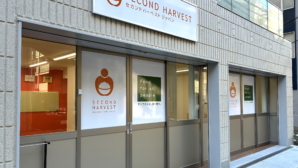
Second Harvest Japan (2HJ), Japan’s first food bank and a certified non-profit organization headquartered in Taito-ku, Tokyo, has announced its next milestone: increasing the volume of food handled annually to 15,000 tons by 2030—ten times its current level. This goal represents a key step in accelerating 2HJ’s mission to establish a sustainable food safety net in Japan. In support of this vision, Second Harvest Japan is pleased to announce the grand opening of the “Riceman Lab,” which will serve as a key station for achieving this objective.
The newly opened Riceman Lab will function as a venue for seminars, training programs, joint CSR activities, and dialogue-based initiatives. Through these activities, 2HJ aims to strengthen existing relationships, build new connections with essential stakeholders, and broaden perspectives on food bank operations in order to advance its long-term goals.
“Riceman,” 2HJ’s logo character holding a bowl of rice, symbolizes food assistance—the core of Second Harvest Japan’s activities—and most directly represents the organization’s identity. The term “Lab” reflects our aspiration to create not merely a physical space, but a place of creation and challenge where new initiatives, systems, and value can be generated. Through collaboration and partnership with a wide range of stakeholders, we aim to continuously evolve this space through experimentation and learning, and to establish it as a hub for sharing new models with society.
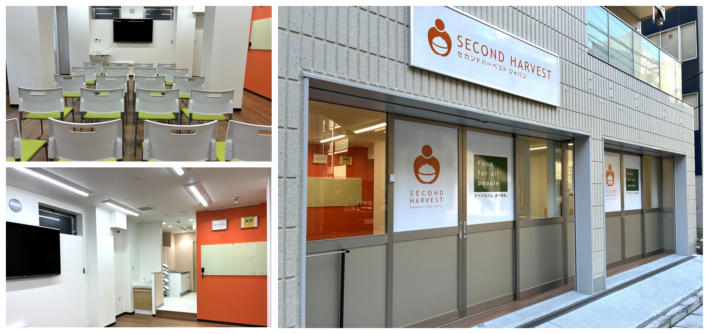
Residence Ryuichiminami 1F, Asakusabashi 4-5-10 Taito-ku, Tokyo
2HJ continues to accelerate collaboration with a wide range of stakeholders across both the public and private sectors to establish a food safety net that ensures everyone can reliably access sufficient, nutritious food whenever it is needed, including in times of emergency.
【Reference】
Towards 2030
With the aim of building a food safety net, 2HJ implemented the “Tokyo 2020: 100,000 Project” from 2016 to 2021. Through this initiative, food pantries were newly established at more than 200 locations across Tokyo, Saitama, and Kanagawa, exceeding the original target. As its next milestone, 2HJ aims to handle 15,000*² tons of food annually—ten times its current volume—by the end of 2030. This expanded capacity is intended to support approximately 85,000*¹ households nationwide that require food assistance.
*¹ Estimated by applying 2HJ’s support coverage rate (approximately 10%) to the projected number of households experiencing poverty, based on the Basic Survey on Social Security and Population Issues.
*² Calculated on the basis of providing 180 kg of food per household per year to 85,000 households.
1) Develop and Expand a Nationwide Supply Chain for Sufficient, Nutritious Food
2HJ will strengthen food procurement through collaboration with food companies, with the goal of improving both the quality and quantity of food provided. In parallel, we will enhance warehousing and transportation capacity by expanding partnerships with logistics companies, in addition to utilizing existing facilities. By addressing the structural challenges of the food bank sector—characterized by a diverse mix of organizations of varying sizes and functions—we aim to establish a nationwide system that efficiently matches available food resources and delivers them to where they are needed.
2) Strengthening Last-Mile Food Delivery and Advancing New Initiatives
2HJ will enhance last-mile food delivery to ensure that food reliably reaches everyone in need, while also exploring the introduction of new approaches. Differences in local food support systems and operational capacity underscore the need for further strengthening to achieve sustainable operations. In addition, uneven regional coverage and variations in target populations mean that many people are still unable to access the assistance they require. By clearly identifying underserved groups, 2HJ will implement measures to address last-mile challenges and will also consider introducing new delivery models, such as unmanned pantries and mobile pantries.
3) Strengthening Partnerships with Government and Related Organizations, and Advancing the Development of Systems and Guidelines
2HJ works in collaboration with government agencies, companies, and related organizations to facilitate food donations and support for people in need, while actively making proposals for the development of systems and guidelines. Going forward, 2HJ will continue to serve as a bridge between policy and on-the-ground activities, further strengthening partnerships with relevant stakeholders and promoting the establishment of a solid foundation for food support.
4) Maintaining and Enhancing Brand Value Through Strong Governance and Proactive Communication
2HJ is committed to strengthening organizational reliability and brand value through robust risk management and strict legal compliance, overseen by its Safety and Health Committee. In addition, 2HJ will increase the visibility of its activities through proactive information sharing and will provide platforms for dialogue among industry stakeholders by hosting symposiums and other events.
Looking Ahead
Achieving our goals will require collaboration with a wide range of stakeholders. While the roles of each organization will differ depending on their size and position within the overall effort, we believe that by increasing the number of partners who understand one another’s roles and work together as equal partners, we can move steadily—step by step—toward our target of handling 15,000 tons of food annually.